The Substation Contemporary Art Prize 2013

I was excited to attend the opening of the Substation Contemporary Art Prize last month because my friend David Thomson was one of 50 finalists in the exhibition.

Overall I was disappointed with the exhibition. The three prizes awarded were all for video works. There were about 13 videos in the show. The SCAP is intended to ‘recognise and encourage innovation in contemporary art practice’.

A video work has to grab my attention or entertain me in the first minute or I turn off. We are so bombarded by video, TV, advertising,  movies, music clips, youtube, that video art has to be really clever or beautiful to stand out (and preferably short!) I dislike work with an obscure conceptual artist statement full of big words that I can’t understand, that I suspect is actually meaningless art wank.

You shouldn’t have to study art theory or have specialist knowledge to appreciate an artwork. I love art, and have studied it for four years, so if I can’t understand the concept behind an artwork, how is the average viewer supposed to understand it?

In the project, by Eric Bridgeman, was a video diary filmed during a artist residency in Canada in 2011. Bridgeman dressed up as a golliwog character and cavorted around his studio in front of a camera. I thought it was self-indulgent narcissism, and I couldn’t believe it when it won first prize and the judge described it as a ‘layered work’ about being an outsider. I don’t understand how this work has any more artistic merit than, say, reality TV footage or an amateur video diary on Youtube. I couldn’t watch the whole thing, I found it repetitive and boring.

bridgeman_in-the-project-005
Still from In the project, Eric Bridgeman, video/DVD, 2012

I think that in 100 years time, video art may be seen as a fad in modern art from the 1960s until now, especially popular since the 1990s. After several decades, the medium is hardly ‘innovative’. The art world is cyclical. It depends on what the art schools are encouraging students to do, and critics and curators are promoting, and it seems they are still pushing video and multi-media work rather than traditional painting, drawing and printmaking. Continue reading “The Substation Contemporary Art Prize 2013”

Artist activist – Ai Weiwei

Watching the documentary Never Sorry about Ai Weiwei recently inspired me to write about this brave and provocative artist.

Ai Weiwei is Chinese, born in Beijing in 1957. He is an artist, designer, architect, political activist, sculptor, curator, publisher and blogger, described as a ‘cultural compass for an entire generation of Beijing artists’.

Ai Weiwei’s father was Chinese poet Ai Qing, who was denounced during the Cultural Revolution and in 1958 sent to a labour camp in Xinjiang with his wife and son. Ai Weiwei was one year old at the time and the family lived in Shihezi for 16 years and in 1975 returned to Beijing.

Weiwei studied at the Beijing Film Academy in the late 1970s, and from 1981 to 1993 he lived in the US, mostly in New York, making conceptual art and using readymade objects in the tradition of Marcel Duchamp and Joseph Beuys.

In 1993 he returned to China when his father became ill, and asked him to come home to China.

In December 2008, he supported an investigation, started by another Chinese artist, into student casualties in the 2008 Sichuan earthquake. Because only schools were destroyed by the quake, questions were raised about the safety and construction of the buildings. A list of 5,385 children killed in the earthquake was compiled by April 2009, and Weiwei published the collected names, as well as articles documenting the investigation, on his blog, which was shut down by Chinese authorities in May 2009. The blog became a memorial for the dead, with the names of the victims scrolling in long lists, and later their names spoken in Chinese as a voiceover.

Weiwei also made a moving installation using children’s backpacks, shown at Haus der Kunst in Munich in 2009. Coloured backpacks spelled out in Chinese a quote from one of the bereaved mothers about her daughter killed in the earthquake: ‘She lived happily in this world for seven years’.

Remembering, Ai Weiwei, installation, 2009

The Chinese authorities were unhappy about this public exposure of the deaths of thousands of children, whose identity was supposed to be a secret.

Ai Weiwei was beaten by the police in August 2009 for testifying for Tan Zuoren, a fellow investigator of the shoddy construction and student casualties in the earthquake. Subsequently he suffered headaches and had difficulty concentrating on his work. In September 2009, he was diagnosed to be suffering internal bleeding and had to have emergency brain surgery. The cerebral hemorrhage is believed to be caused by the beating.

In April 2011, Weiwei was secretly detained by the police for 81 days at the Beijing Capital International Airport while on his way to board a flight to Hong Kong. He was released on bail on fabricated tax charges. Although the bail was lifted after a year, the authorities have not returned his passport and he remains prohibited from travelling outside China.

I admire and applaud his bravery in witnessing and exposing these events in his blog and art, and calling the Chinese regime to account.

My art is for sale on Etsy!

At long last I’ve opened a shop on Etsy, prompted by a lack of cash flow at the moment.

Please take the time to have a look. I’ll be adding more work in the next few days…

Lavandula lavender farm, near Daylesford

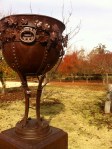
I recently visited Lavandula lavender farm. It’s incredibly beautiful and there was a sculpture show on as a bonus. Sculptures from 25 artists, including Zoe Amor, Paul Turbitt, and Kaya Storm dotted the gardens.

My favourite sculpture in the show was by Peter Laszlo.

The soul is like a sail

This work was inspired by the Revelation of Ares.
In this book the Creator asks Humanity to change towards the Good.
The book explains that man is not born with a soul but has to create
one for himself. This can only be achieved by following the virtuous way
of life. One does to need to believe in any religion or dogma, simply
to love other human beings and respect all living things…
Once the soul has been created by a virtuous loving, giving and forgiving life it will glide along the sea of spiritual eternity.

The soul is a sail, Peter Lazlo

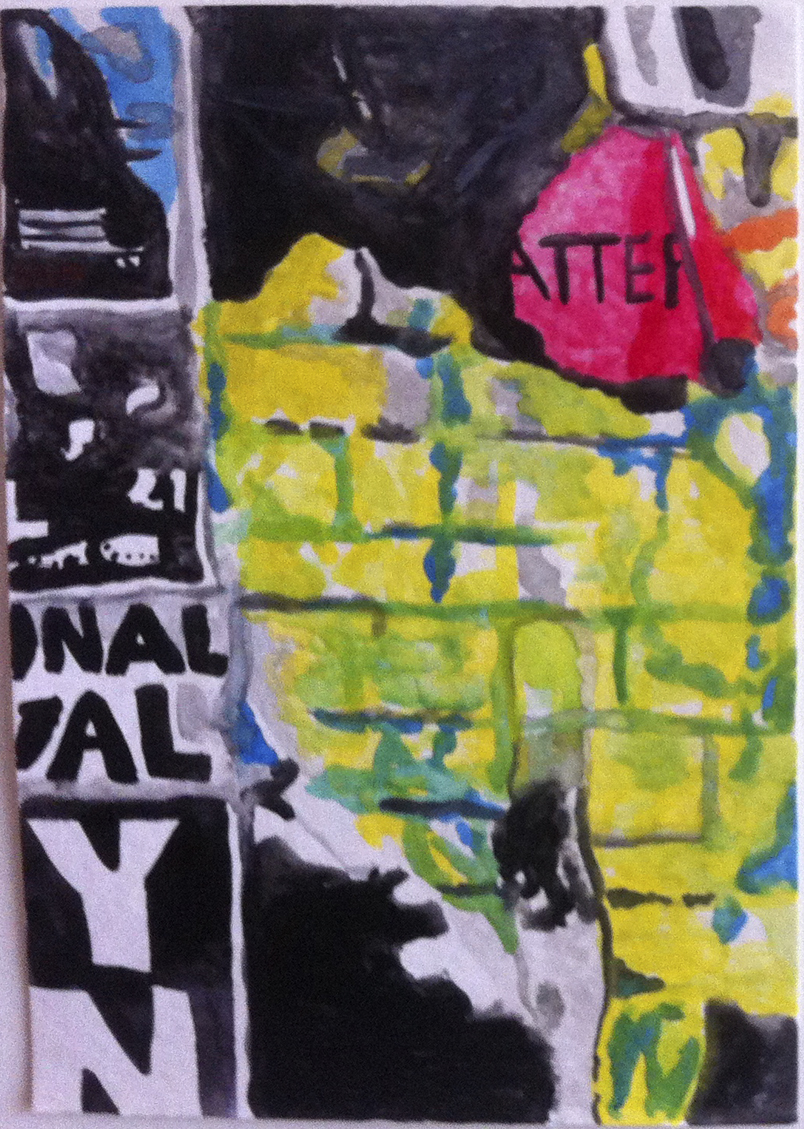
More water colours

I’ve been really busy with my day job and study lately, but have finally added two more watercolours to the Palimpsest series. Sorry about the poor photo quality, these were taken with my iphone. By the way, I’m officially addicted to iphone. Darn it.

Water colour on paper
Palimpsest III, water colour on paper
Water colour on paper
Palimpsest IV, water colour on paper

A forgotten Melbourne painter

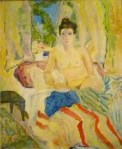
The red hat, William Frater, 1937, oil on canvas

This is a portrait of Lina Bryans (1909–2000) by her friend and fellow artist William Frater. Lina Bryans was an important part of the modern movement and a member of literary and artistic circles in Melbourne during the late 1930s and 1940s. Her vibrant paintings are characterised by bold brushwork and the expressive use of colour which is applied directly onto the canvas. In 1937 Bryans began painting portraits of her friends. Her most famous work, The babe is wise, is a portrait of the writer Jean Campbell who had recently published a novel of the same name.  (NGV blurb)

Action / Abstraction – Wangaratta Art Gallery

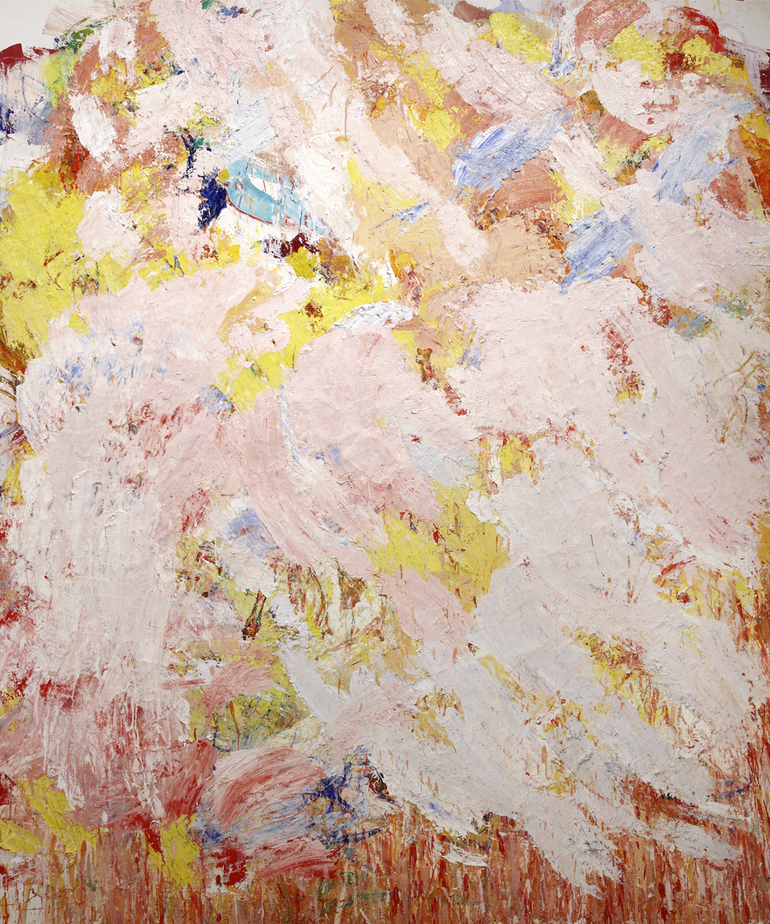
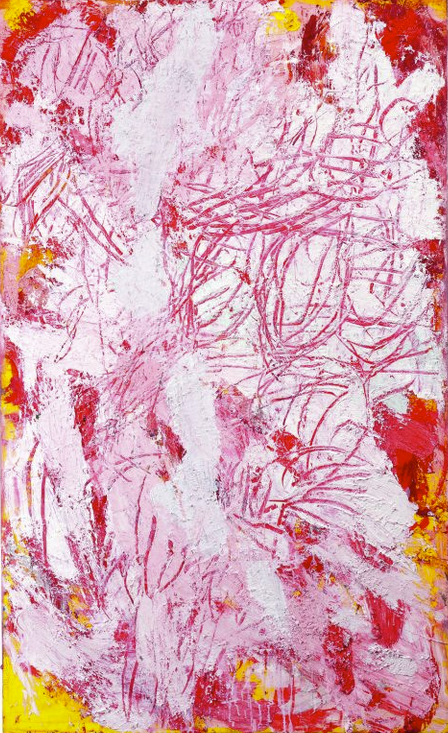
I recently visited Action/Abstraction. It was inspiring. If you like abstract painting I highly recommend seeing this exhibition. Five painters are represented: Jo Davenport, Sally Gabori, Todd Hunter, Ildiko Kovacs, and Aida Tomescu. Let’s start with Aida Tomescu, a painter I’m growing to love more and more. Tomescu layers paint, scrapes back, drips and splatters, draws into the work, and adds more layers. Her paintings have a strong physical presence and are bold, complex, and beautiful.

aida tomescu_crossgrain_12
Tomescu was a finalist in the Wynne Prize 2012 with Crossgrain.
What I wanted to get to was a unified presence, full and ordered with a light and clarity of its own.
Intensively worked, scraped back repeatedly, and reconsidered, Crossgrain is not a painting about texture. Nor is the image trying to create a special illusion of a representative world – though if you want to think in terms of earth, air, the soft steps of the sky, it is all of those things.
I think of Crossgrain more as a space where mood, movement, vibration, the linkages of marks across the surface and their special behaviour form a particular experience.

(from her artist statement)

The exhibition runs until 24 March.

Aida Tomescu, Aspen, 2010Aida Tomescu, Aspen, 2010

Aida Tomescu, Tethys II, 2010Aida Tomescu, Tethys II, 2010

One a day

I was getting frustrated with myself for not doing enough work… I think not having a studio at the moment isn’t helping. But maybe that’s just an excuse. Anyway I decided to set myself the challenge of doing at least one drawing, sketch or small painting every day for a month. Here are the first few… I haven’t got anything for yesterday but I was printmaking at Uni all day and I made a few nice prints, but didn’t photograph them.

22/02/13 Kusama window, water colour22_02_yayoi window

23/02/13 Kate, water colour23_02_kate

24/02/13 Succulents, water colour24_02_succulents

25/02/13 collage25_02_collage